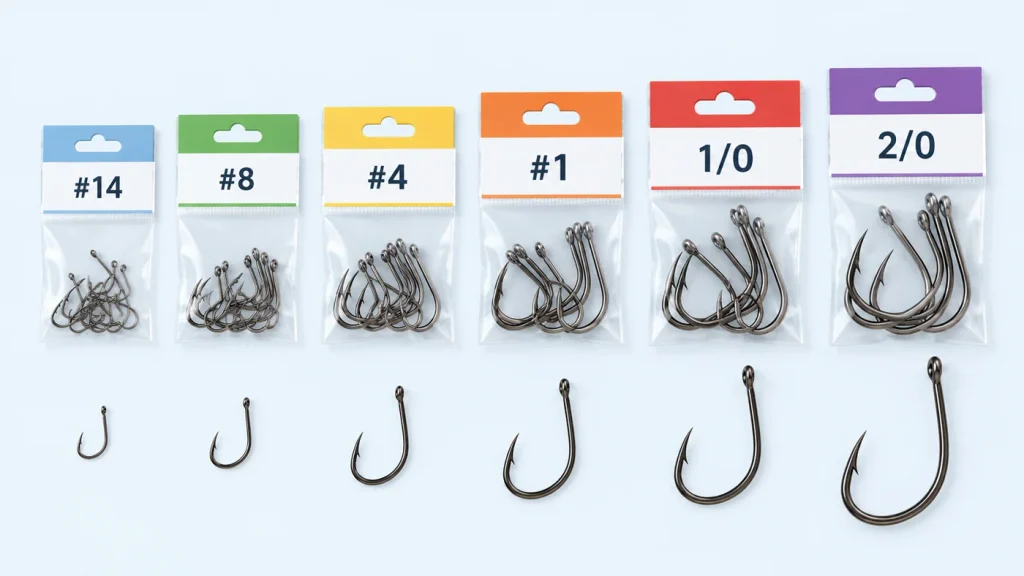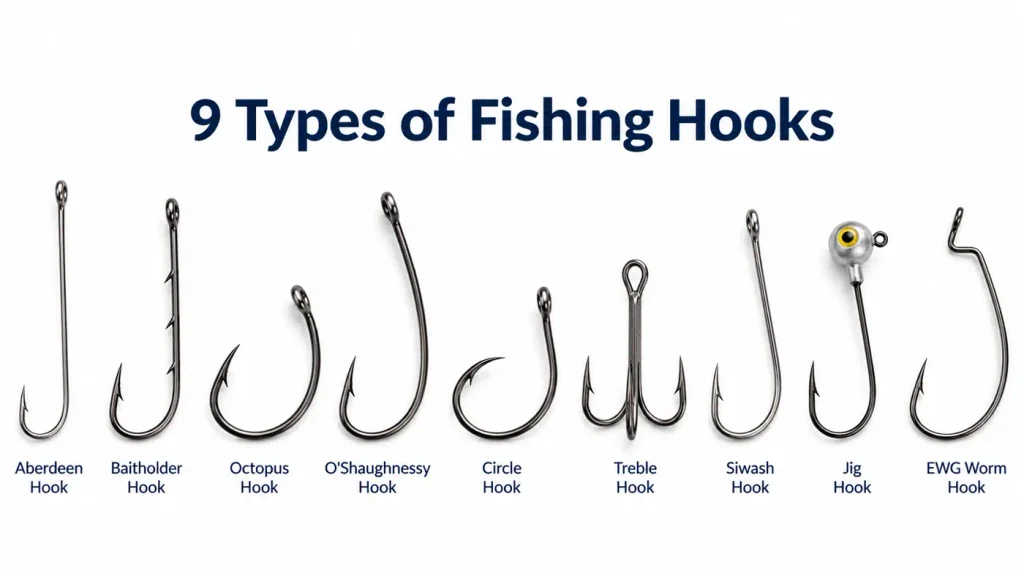
Anglers who search for how to tie a fishing hook and sinker rarely need another knot guide. They need a rig that behaves in the water. The hook holds the fish, the sinker holds the bottom, and most failures happen in the span between them: it wraps on the cast, drags the bait into silt, or lets the weight run in current. Open-water rigs usually start from Saltwater Hooks, because heavy weights and long casts load that span hardest.
Tying a fishing hook and sinker means building one small system in a fixed direction, from the rod end to the hook: any part that has to slide on the main line goes on before the hook knot is tied, a bead and swivel follow, the leader sets the distance, and the hook closes the rig. The gap between hook and weight decides whether the bait rests on the bottom or rides above it, and that gap is a decision, not a fixed number.
Both take a few minutes to build, and the sections that follow explain why each part sits where it does.
How to Tie a Fishing Hook and Sinker Step by Step
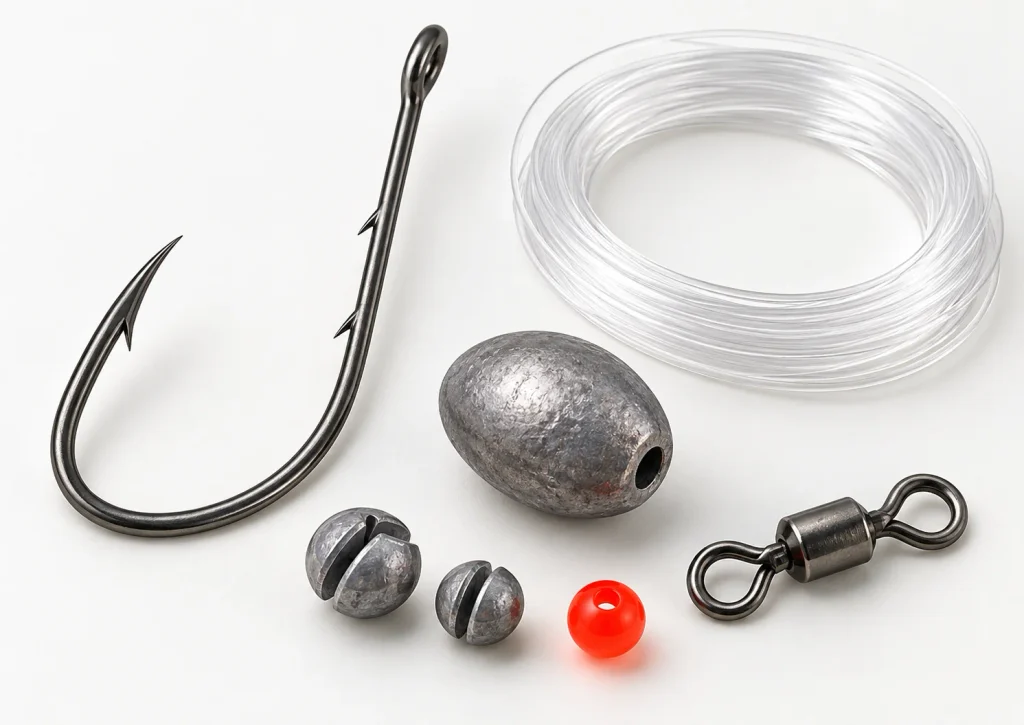
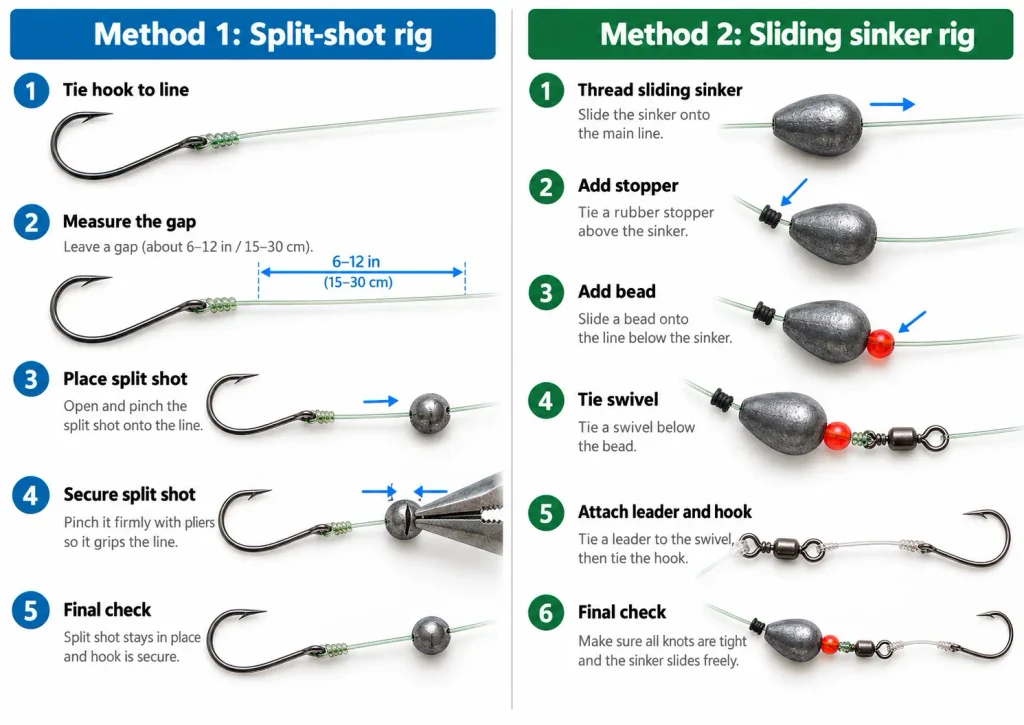
Both builds run from the rod end toward the hook. A split-shot rig puts the hook at the end of the main line and crimps the weight above it; a sliding sinker rig threads the weight, a bead and a swivel onto the main line first, then hangs a leader and hook below. One weight clamps on afterwards, the other must travel down the line before anything closes the end.
Choose by what the weight has to do: shallow water needs only a slow sink, while depth, current and long casts need the sliding version.
Method 1: A Simple Split-Shot Rig
The lightest usable version, with the weight crimped in place so it can go on after the hook.
- Tie the hook to the end of the main line; seating and failure signs are set out in How to Attach Fishing Hook to Line.
- Set the gap before adding weight, measuring against the rod guide spacing.
- Lay the line in the slot of the split shot and close it with pliers on the tab until it grips. Crushing it flat damages the line.
- Slide the shot into place, wet the line, and pull gently against it.
- Confirm the hook point is clear and the line above the shot is not kinked.
A split shot moves without touching the hook knot, which is why this rig tolerates late changes.
Method 2: A Sliding Sinker Bottom Rig
This one holds in depth and current, and its order is not a preference: the sinker, stopper, bead and swivel must pass down the main line before anything closes that end.
- Thread the sliding sinker onto the main line.
- Add a stopper above the sinker if you want to limit how far it travels up, keeping the bait at a repeatable depth.
- Add a protective bead below the sinker, so the weight cannot hammer the next knot.
- Tie the swivel to the main line.
- Cut a leader, tie one end to the swivel and the other to the hook.
- Wet and seat every knot, then trim the tags.
This is one common sliding structure, not a universal order; fixed weights, drop-shot layouts and dropper arms change the sequence.
How to Check the Finished Rig Before Casting
A rig can look right and still be unfishable. Five checks catch nearly all of it:
- Every knot seated, wraps touching, tag end clear.
- A sliding weight moves freely; a fixed weight does not move at all.
- The hook point is clear of leader, bead and bait.
- No kink or flat spot in the line above the hook.
- The rig hangs straight from the rod tip.
Should the Hook or Sinker Go on First?
On a sliding rig the weight goes on first, because it has to travel down the main line and cannot pass a tied hook. On a fixed rig the answer depends on how the weight attaches, not on tradition: a split shot clamps onto the line and can go on last, while a drop-shot layout puts the hook above the weight and therefore ties the hook first.
What constrains the order is whether a part must pass over the end of the line, which is what separates one fishing rig structure from another.
Fixed Weights vs. Sliding Weights
A fixed weight attaches at one point and stays: crimped on, pegged against the bait, or hung on a separate arm. Nothing must pass the hook, so the hook knot can be tied whenever it suits. A sliding weight runs between two limits, and every part of that run must be assembled in sequence, because a bead or stopper will not pass a finished hook knot.
How Rig Design Changes Assembly Order
Order also changes how force reaches the hook. On a sliding rig the weight runs up the line and stops against the swivel, so the fish is felt through hook and main line. On a fixed rig the weight stays put, and the bait must move it whenever the line tightens.
| Rig type | Component order | Why the order matters |
| Sliding sinker rig | Main line, sinker, bead, swivel, leader, hook | Sinker and bead cannot pass a tied hook |
| Split-shot rig | Hook first, split shot crimped above | The weight clamps on instead of threading over |
| Drop-shot layout | Hook above, weight last on the tag end | The weight sits below the hook |
| Three-way or dropper arm | Weight on one arm, hook on the other | Separate arms block nothing |
How Far Should a Sinker Be From the Hook?
There is no single correct distance. The gap sets how high the bait rides above the bottom and how much freedom the hook has: a short gap pins the bait down and cuts tangle, a long gap lets the bait drift and look natural but leaves more line to wrap. The workable distance is the one that keeps the bait in the layer you meant to fish.
Treat any published figure as a starting point; weight, bait, bottom and current all push it.
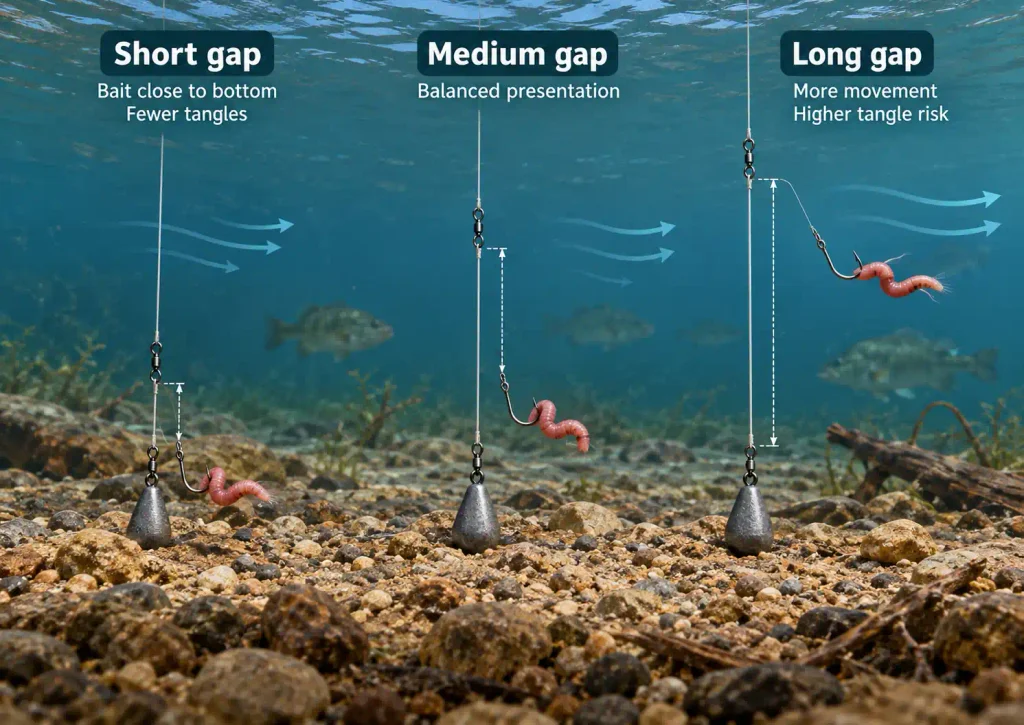
Starting Distances for Common Rigs
| Situation | Starting distance | Reason | Adjustment |
| Split shot, bottom bait, still water | 6 to 12 in (15 to 30 cm) | Bait sits low but can move | Shorten if the line wraps the hook |
| Sliding sinker, moderate current | Leader of 12 to 18 in (30 to 45 cm) | Lifts bait clear of disturbed silt | Lengthen in clear water |
| Dropper or three-way arm | Weight arm 12 to 18 in, hook arm 24 to 36 in | Short arm anchors, long arm presents | Shorten both in fast water |
| Drop-shot layout | 12 to 24 in (30 to 60 cm) above the weight | Sets height off the bottom | Reduce over flat silt |
| Heavy surf or fast current | Shorter than the calm-water default | Less line for current to bow | Add weight before length |
The check that matters is the result, not the number: once the weight settles, the bait should still be in the intended layer.
Short vs. Long Leaders
A short leader behaves like a stiff extension of the weight: bait stays low, casts go straighter, tangles drop, at the cost of presentation. A long leader restores movement but adds slack, costs accuracy, and gives a bite further to travel.
How to Adjust for Current, Bait, and Bottom Conditions
Current is the most ignored variable. Moving water bows the leader downstream, and a bowed leader lifts the bait whether or not that was wanted, so adding weight usually beats adding length. Bait size sets the floor, and over soft bottom the leader should stay short.
Why Fishing Hook and Sinker Rigs Get Tangled
Most tangles come from the two ends travelling at different speeds while the line between them goes slack at the wrong moment. The weight leaves the rod with more momentum, the baited hook follows with more drag, and whichever end loses that race leaves a loop the other can catch. The phase of the cast decides which failure you get.
Name the phase first, because the correction differs for each.
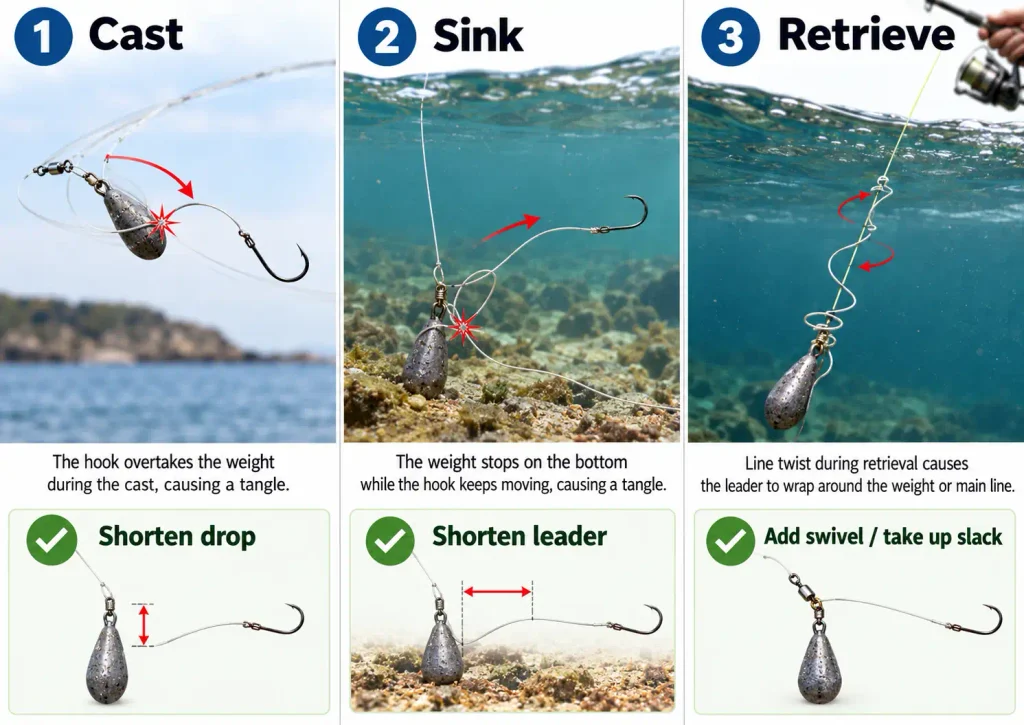
Tangling During Casting
The weight accelerates first and the baited hook trails. With a long drop from the rod tip, or a hard snap instead of a smooth arc, the hook overtakes the weight and the leader wraps over the line above it. Shorten the drop, load the rod progressively, and feather the spool as the rig lands.
Tangling as the Rig Sinks
The weight reaches bottom and stops while the hook is still descending, so the line between them goes slack, and in current the bait keeps drifting. A weight much denser than the bait widens that speed gap, and so does a long leader.
Tangling During Retrieval
On the way back the failure is usually twist. A round weight that spins, or a bait that rotates, feeds twist into the line, and the twist shows as coils that wrap the leader. Without a swivel, that twist accumulates cast after cast.
Four Practical Ways to Prevent Tangles
- Close the speed gap with the lightest weight that still holds bottom.
- Shorten the free span until tangles stop, then lengthen it one step at a time.
- Add a swivel between main line and leader to break the twist path.
- Straighten the rig at splashdown by feathering the spool and taking up slack.
Choosing the Right Hook and Sinker for Bottom Fishing
The weight is chosen by the bottom and the current, the hook by the bait and the fish’s mouth. The two must be balanced: a weight too heavy for the hook and bait makes the rig fall as a dead lump, and a hook too large for the bait leaves the point exposed.
A perfect knot on an unbalanced rig still fishes badly.
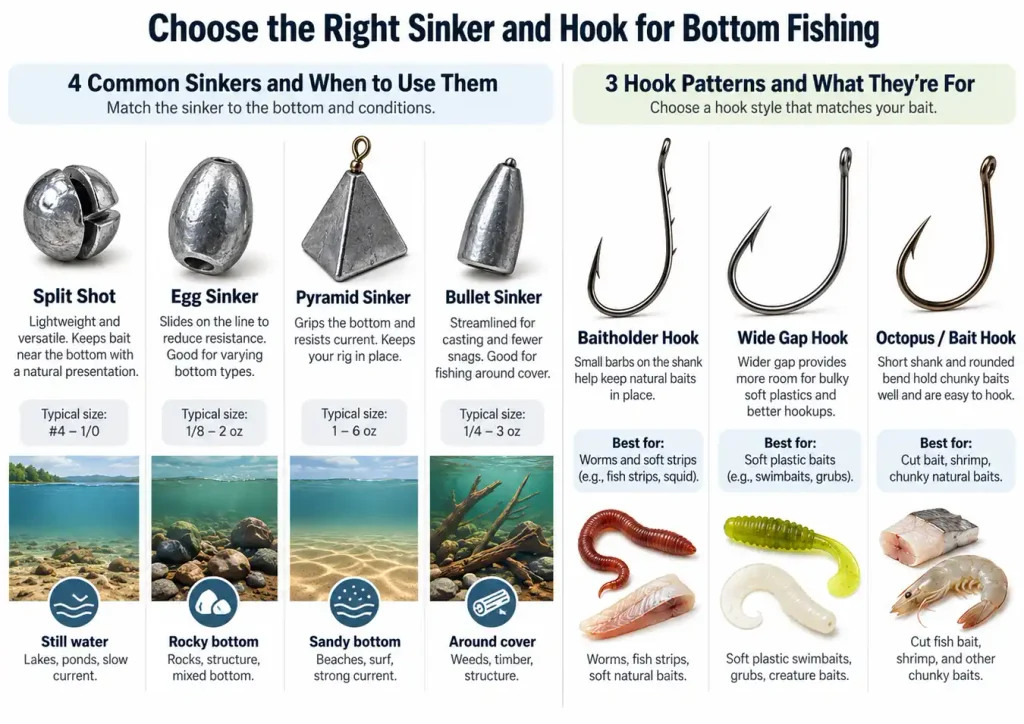
Sinker Shapes for Different Bottom Conditions
Shapes are functional. Flat and coin weights spread contact and resist rolling, pyramid shapes dig into sand, egg and barrel weights roll over rock instead of wedging in, and bullet weights slip through cover point first. Match the shape to what the bottom does to a weight, as overviews of fishing sinkers describe.
Matching Hook Pattern to Bait Presentation
Bait type decides more than species does. Worms and soft strips need shank barbs or a long shank so the bait stops sliding into the bend, which is what Baitholder Hooks are built for. Soft plastic bodies need a wide gap so the body does not fill the space between shank and point, which is why Wide Gap Hooks exist. Cut bait and shrimp sit in the Bait Hooks range, and the patterns for fishing hooks for different species narrow the choice faster than a size chart.
Avoiding an Unbalanced Hook-and-Weight Setup
Balance is a set of ratios, not a specification. A heavy weight on light line loads the line before the hook reaches the fish, and a fine-wire hook can be opened by the weight’s momentum when a snagged rig is pulled free. Watch the rig fall: a balanced setup descends as a connected unit.
Common Mistakes When Setting Up a Hook and Sinker
Most rig failures are not knot failures. They come from assembling parts in an order that cannot be undone, choosing weight by habit instead of by condition, and leaving a leader length unchanged from the last trip.
Putting Components in the Wrong Order
The classic version is tying the hook before discovering that a bead or swivel still has to go on the main line. Nothing passes a finished hook knot, so the line gets cut and the rig rebuilt shorter. The reverse mistake is placing the bead above the sinker instead of between sinker and knot.
Using Too Much or Too Little Weight
Too much weight kills presentation: the rig stops moving with the current and the weight finds every snag. Too little never makes contact, so a bite cannot be told from the bottom moving. The workable weight is the lightest one that still lets the rod tip feel bottom.
Leaving a Leader Too Long for the Conditions
A leader that worked in clear water becomes a liability in wind, current or a tight casting lane. Long leaders cost accuracy, bow in current, and wrap the main line when a cast goes wrong. Shorten first when tangles appear.
Ignoring Knot and Line Damage
Sinkers damage line quietly. A sliding weight hammers the knot below it unless a bead absorbs the impact, a split shot crimped too hard leaves a flat spot, and moving a shot abrades the line. Run the line between finger and thumb after every change.
Frequently Asked Questions
These come up after the rig has been in the water, when the setup has to be adjusted rather than built.
Does a Hook and Sinker Rig Need a Swivel?
Not always, but more often than expected. A swivel joins main line to leader and interrupts twist before it reaches the spool. A short split-shot rig can fish without one. Once a round weight can spin or the line hangs in coils, it pays for itself.
How Heavy Should the Sinker Be?
Heavy enough to hold, light enough to feel. Cast, let the rig settle, then lift the rod tip: if the weight moves downstream, add weight; if the tip cannot register a tap, the rig is too heavy. A flat weight holds with less lead than a round one.
Can You Change the Sinker Without Retying the Hook?
It depends on the attachment, and the hook knot is usually not the one at risk. A split shot opens without touching a knot, a weight on a drop-shot tag end swaps freely, and a sliding weight cannot come off without cutting above it, so the swivel joint gets rebuilt instead.
Does Sinker Weight Affect Hook Size?
Not directly, but it shapes the balance around hook size. Heavier weight usually means heavier line and longer casts, which calls for a hook with enough wire strength not to open. Lighter weight allows finer wire and a smaller hook.